
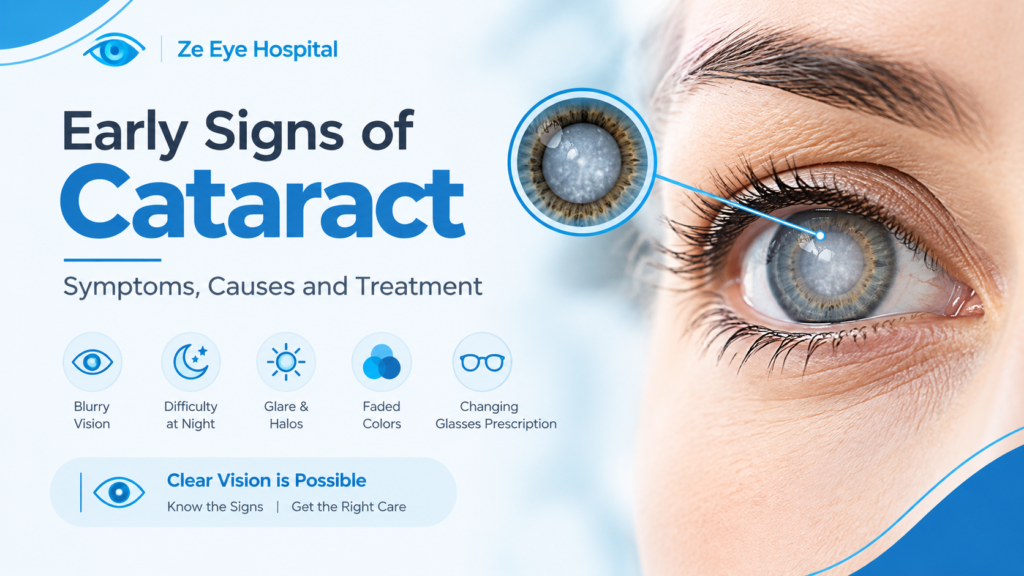
Cataracts are one of the most common causes of vision problems, especially with increasing age. A cataract develops when the natural lens inside the eye becomes cloudy, making it harder for light to focus properly on the retina. In the early stages, cataracts may cause little or no noticeable change in vision. As the cataract progresses, however, everyday activities such as reading, driving, watching television, or seeing clearly at night can become difficult.
Recognizing the early signs of cataract can help you arrange an eye examination before your vision problems significantly affect your daily life.
Not every vision change is caused by a cataract. Similar symptoms can occur with other eye conditions, so a comprehensive eye examination is important for an accurate diagnosis.
What Is a Cataract?
A cataract is a cloudy area that develops in the natural lens of the eye. The lens is normally clear and helps focus light onto the retina. When the lens becomes cloudy, light does not pass through it normally, which can lead to blurry, hazy, dim, or less colorful vision.
Most cataracts develop gradually as part of the aging process. However, cataracts can also be associated with factors such as diabetes, smoking, eye injuries, previous eye surgery, prolonged sunlight exposure, certain medications such as corticosteroids, and a family history of cataracts.
Early Signs of Cataract
Early cataracts may not cause obvious symptoms. In fact, some people have cataract-related changes in the lens before they notice any significant vision problem. As the cataract develops, several changes may become noticeable.
1. Blurry or Hazy Vision
One of the most common signs of cataract is blurred or cloudy vision.
You may feel as though you are looking through a dirty or foggy window. Objects may not appear as sharp as they used to, even when you are wearing your usual glasses.
If your vision gradually becomes less clear without another obvious reason, an eye examination can help determine whether a cataract or another eye condition is responsible.
2. Difficulty Seeing at Night
Another early warning sign can be difficulty seeing in low-light conditions.
You may notice that:
- Driving at night becomes more difficult
- Road signs are harder to see
- Dark areas appear less clear
- You need more light when reading
- You feel less confident moving around in dim lighting
Night vision problems can have several causes, so they should not automatically be attributed to cataracts.
3. Increased Sensitivity to Light
Cataracts can cause increased sensitivity to bright light. Sunlight, lamps, and vehicle headlights may seem unusually uncomfortable or intense.
This can be particularly noticeable while driving at night when headlights from oncoming vehicles create excessive glare.
4. Seeing Halos Around Lights
Some people with cataracts notice halos or rings around lights.
For example, streetlights, headlights, or other bright sources may appear to have a glowing circle around them. This can make night driving uncomfortable and reduce visual clarity.
However, halos can also occur with other eye conditions, so an eye examination is recommended.
5. Faded or Yellowish Colors
Cataracts can affect how colors appear.
You may notice that:
- White objects look slightly yellow
- Bright colors appear dull
- Images seem less vibrant
- There is less contrast between different colors
This happens because changes in the natural lens can affect the way light reaches the retina.
6. Frequent Changes in Glasses Prescription
If you find that your glasses prescription needs to be changed repeatedly, it may be worth having your eyes examined.
A new prescription may temporarily improve vision in the early stages of a cataract, but progressively changing vision can sometimes indicate that the cataract is developing.
7. Double Vision or Ghost Images in One Eye
Cataracts can sometimes cause double vision or a “ghost” image in the affected eye.
This symptom can be confusing because double vision may have many possible causes. If you experience new or persistent double vision, consult an ophthalmologist for an examination.
8. Needing Brighter Light for Reading
If you previously read comfortably under normal lighting but now need a brighter lamp, additional lighting, or larger text, it may be an early indication of changing vision.
This does not necessarily mean you have a cataract, but it is a good reason to schedule an eye examination.
9. Difficulty With Everyday Activities
As cataracts progress, vision changes may start interfering with normal activities such as:
- Reading books or newspapers
- Using a computer or phone
- Watching television
- Driving
- Recognizing faces
- Cooking
- Walking in unfamiliar or poorly lit areas
When vision problems begin affecting your quality of life, it is important to discuss treatment options with an eye specialist.
What Causes Cataracts?
Age is the most common cause of cataracts. Natural changes in the proteins within the eye’s lens can cause the lens to gradually become cloudy over time.
Other factors that may increase the risk include:
- Age: Cataracts become more common as people get older.
- Diabetes: Certain medical conditions can increase cataract risk.
- Smoking: Smoking is associated with a higher risk of cataracts.
- Sun exposure: Long-term exposure to ultraviolet (UV) radiation can contribute to cataract development.
- Eye injuries: Previous trauma to the eye can cause a cataract.
- Previous eye surgery: Some cataracts can develop following certain eye procedures.
- Steroid medications: Certain corticosteroid medications can increase the risk.
- Family history: Cataracts can occur more frequently in some families.
Can Cataracts Be Prevented?
There is no guaranteed way to prevent age-related cataracts, but taking care of your eyes may help reduce certain risk factors.
Protect Your Eyes From UV Rays
Wear sunglasses that provide UV protection when spending time outdoors. A wide-brimmed hat can provide additional protection from sunlight.
Avoid Smoking
Smoking is associated with an increased risk of cataracts. Quitting smoking can benefit your overall health as well as your eye health.
Protect Your Eyes From Injury
Use appropriate protective eyewear during activities that could expose your eyes to injury.
Manage Health Conditions
If you have conditions such as diabetes, follow your doctor’s recommendations for managing them and attend regular eye examinations.
Have Regular Eye Examinations
Regular comprehensive eye examinations can help detect cataracts and other eye conditions, sometimes before you notice symptoms yourself.
How Are Cataracts Diagnosed?
An ophthalmologist can diagnose cataracts during a comprehensive eye examination.
The examination may include checking your visual acuity and examining the structures of the eye, including the lens. A dilated eye examination can help the doctor identify cataracts and check for other eye problems.
If you are experiencing changes such as blurry vision, increased glare, difficulty seeing at night, or faded colors, don’t assume that the problem is simply due to age or an outdated glasses prescription.
A proper eye examination can determine the cause.
When Is Cataract Surgery Needed?
Having an early cataract does not necessarily mean that you need immediate cataract surgery.
In the early stages, your eye doctor may recommend measures such as:
- Updating your glasses prescription
- Improving lighting when reading
- Using anti-glare sunglasses
- Using magnification for certain activities
As the cataract progresses, surgery may be recommended when the vision problems begin interfering with your daily activities.
For example, cataract surgery may be considered when you are having difficulty:
- Reading
- Driving
- Working
- Watching television
- Using digital devices
- Performing household activities
- Seeing clearly in low-light conditions
The decision should be made with your ophthalmologist based on your symptoms, eye health, lifestyle, and visual needs.
What Happens During Cataract Surgery?
Cataract surgery involves removing the cloudy natural lens and replacing it with an artificial lens called an intraocular lens (IOL).
During the procedure, the eye is numbed with medication, and the surgeon removes the cloudy lens before placing the artificial lens inside the eye. Cataract surgery is generally performed while the patient is awake, although medication may be provided to help the patient remain comfortable and relaxed.
Cataract surgery is one of the most commonly performed eye surgeries, and most patients experience improved vision afterward.
Why Early Detection of Cataract Matters
Cataracts generally develop gradually, so it is easy to adjust to slowly changing vision without realizing how much your eyesight has changed.
You may initially compensate by:
- Increasing the brightness of lights
- Moving closer to the television
- Increasing text size on your phone
- Avoiding night driving
- Changing your glasses frequently
These adjustments can hide the progression of cataracts.
A professional eye examination can determine whether cataracts are present and whether another eye condition may be contributing to your symptoms.
When Should You See an Eye Specialist?
Schedule an eye examination if you notice:
- Persistent blurry vision
- Difficulty seeing at night
- Increased glare from headlights
- Halos around lights
- Faded or yellowish colors
- Frequent changes in your glasses prescription
- Double or ghost images
- Difficulty reading despite adequate lighting
- Vision problems affecting your daily activities
Remember that these symptoms are not exclusive to cataracts. Other eye conditions can cause similar changes, so proper diagnosis is important.
Frequently Asked Questions About Early Signs of Cataract
The first signs can include slightly blurry or hazy vision, difficulty seeing at night, increased glare, halos around lights, faded colors, and needing brighter light for reading. Some people may have no noticeable symptoms in the earliest stage.
Yes. Early cataracts may not cause noticeable symptoms. Vision changes usually become more apparent as the cataract progresses.
Cataracts become more common with age. Changes in the proteins of the natural lens can begin around age 40, although significant vision problems may not develop until many years later.
Yes. Blurry, cloudy, or hazy vision is one of the most common symptoms of cataracts.
Yes. Cataracts can make it harder to see in low-light conditions and may increase glare from headlights, making night driving more difficult.
Conclusion
Recognizing the early signs of cataract can help you take action before vision changes begin to interfere with your everyday life. Blurry vision, night-vision difficulties, glare, halos around lights, faded colors, and frequent changes in glasses prescription are some of the symptoms to watch for.
If you notice changes in your vision, don’t wait for your eyesight to become severely impaired. An eye examination can identify whether a cataract is present and whether monitoring, a new prescription, or cataract surgery may be appropriate.
Clear vision starts with regular eye care. If you are experiencing possible cataract symptoms, schedule a comprehensive eye examination with an ophthalmologist.